Introduction
Teams deciding between an ISA model and AI follow-up are often trying to solve the same underlying problem:
too many leads, not enough consistent follow-up.
The important question is not which model sounds more modern. It is which one improves response speed, qualification quality, and booked conversations for your specific operating model.
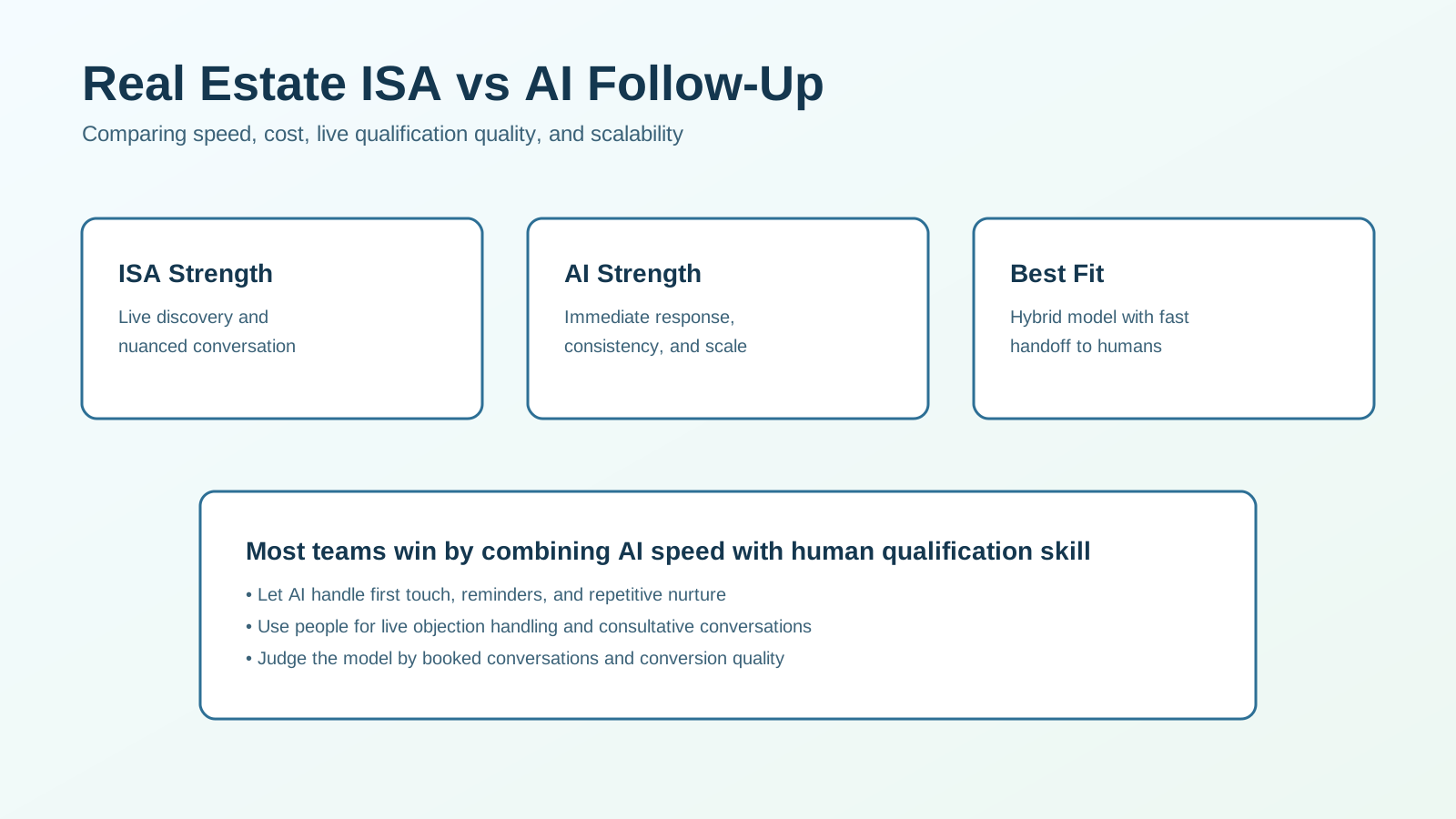
This comparison breaks down where each approach wins, where it fails, and when a hybrid model makes more sense than choosing a side.
For more decision-focused articles in this area, see Comparison Articles.
Definitions
ISA Model
An ISA, or inside sales agent, handles activities such as:
- early lead contact
- qualification calls
- follow-up persistence
- appointment setting
AI Follow-Up Model
An AI or automation-led model handles:
- instant acknowledgment
- first-touch messages
- no-reply sequences
- reminders and routing
- basic stage logic
The AI model is operationally different. It is designed around repeatability rather than live conversation skill.
Side-by-Side Comparison
| Factor | ISA Model | AI Follow-Up Model |
|---|---|---|
| Speed-to-lead | Depends on staffing and queue management | Usually strongest for immediate response |
| Live conversation quality | Strong when the ISA is skilled | Limited until handoff occurs |
| Consistency | Depends on coaching and compliance | High if the workflow is configured well |
| Scalability | Requires more headcount | Lower marginal cost as volume grows |
| Data capture | Variable by discipline | Stronger when built inside CRM workflow |
| Cost structure | Labor-heavy | Setup-heavy, then efficient at scale |
Where the ISA Model Wins
The ISA model is stronger when:
- live discovery matters early
- leads need talk-track adaptation in real time
- objection handling starts quickly
- the business already has strong sales management
An excellent ISA can surface intent and nuance better than a generic automation sequence.
Where the AI Model Wins
AI follow-up is stronger when:
- speed must be immediate
- volume is inconsistent or spikes often
- the team needs structured routing and reminders
- missed first touch is the main bottleneck
This is especially true when the business is losing leads before a real conversation ever starts.
Related reading:
- AI Client Follow-Up System for Real Estate: Complete Workflow Guide
- Manual vs Automated Lead Follow-Up for Realtors: What Actually Converts Better?
Cost Reality
ISAs typically create:
- fixed payroll or contractor cost
- management overhead
- quality variability by person
AI follow-up typically creates:
- implementation cost
- tool cost
- maintenance and optimization work
The lowest-cost option is not always the highest-ROI option. The right model depends on whether your bigger constraint is human sales capacity or operational consistency.
Best-Fit Scenarios
Choose ISA-First If:
- you already generate enough qualified demand
- live qualification quality is your main advantage
- your management system is strong enough to coach consistency
Choose AI-First If:
- speed-to-lead is your main weakness
- too many leads wait for first response
- your team needs better routing and accountability
Choose Hybrid If:
- you want immediate first-touch and reliable nurture
- you still need human-led qualification and booking calls
For most teams, hybrid wins.
Recommended Hybrid Model
Use AI for:
- immediate acknowledgment
- first-touch SMS and email
- reminder and reactivation logic
- early qualification capture
Use a human for:
- live calls
- deeper qualification
- objection handling
- consultation booking on warm leads
That model lets each layer do the work it is best at.
Risks to Watch
AI-only risk
- weak handoff to human owner
- robotic messaging
- no live discovery depth
ISA-only risk
- delayed first touch
- inconsistent note capture
- poor scalability under lead spikes
The highest-performing teams reduce both sets of risks rather than defending one model ideologically.
Conclusion
The ISA versus AI question is really a process-design question.
If your team needs speed and consistency, AI follow-up should usually be part of the system. If your business depends on skilled live qualification, a human layer still matters.
That is why the most practical answer for many teams is not ISA or AI. It is ISA with AI-supported operations.