Introduction
Solo agents feel the operational cost of inconsistency faster than anyone.
When one person is responsible for marketing, listing coordination, lead follow-up, appointments, and client communication, small delays turn into missed opportunities quickly.
That is why real estate ai automation solo agents can actually maintain matters more than feature volume.
You do not need an enterprise setup. You need a short list of automations that protect speed, reduce admin drag, and keep deals moving.
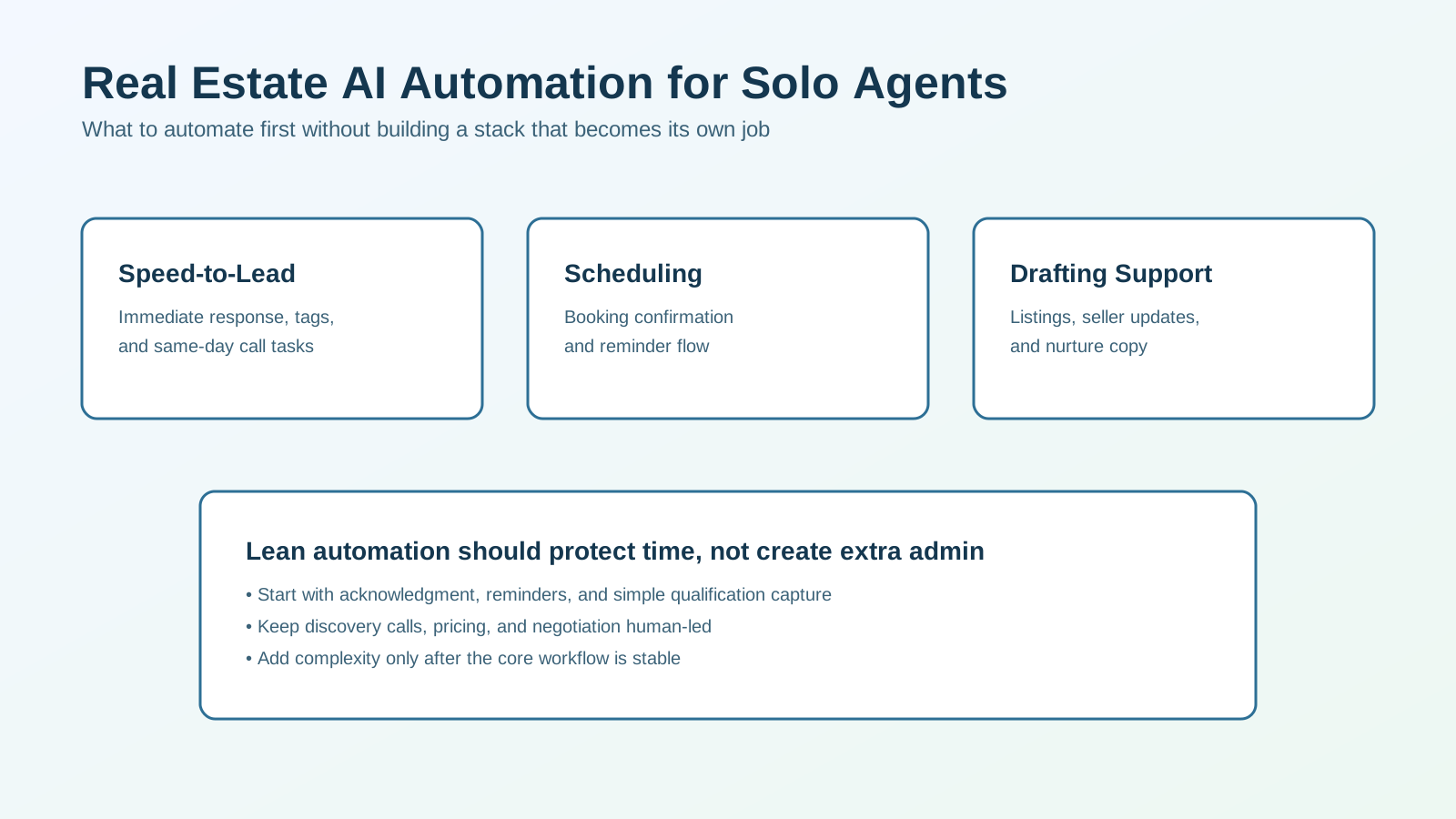
This guide focuses on what to automate first, what to leave manual, and how to build a lean operating model without creating tool chaos.
For broader educational context around this content type, see Guides.
The Goal for Solo-Agent Automation
Automation for a solo agent should do three things:
- protect response speed,
- reduce repeat admin work,
- preserve personal communication where it matters most.
If a system adds friction or constant maintenance, it is not helping.
That is why solo agents should optimize for reliability over sophistication.
What to Automate First
1. New Lead Acknowledgment
This is usually the highest-return automation.
When a new inquiry arrives, trigger:
- immediate acknowledgment by text or email
- lead-source tagging
- a same-day call task
This does not replace the live conversation. It prevents the dead zone between inquiry and response.
Related reading:
- Real Estate Lead Follow-Up Automation: Complete Workflow Guide
- 25 Real Estate Follow-Up Text Message Prompts for ChatGPT
2. Appointment Confirmation and Reminder Flow
Solo agents lose time when scheduling details live in scattered notes.
Automate:
- booking confirmation
- calendar sync
- reminder text or email
- reschedule prompt if needed
This reduces no-shows and keeps your day structured.
3. Basic Qualification Capture
Do not build a giant scoring system first. Start with a simple readiness framework.
Capture:
- buyer or seller intent
- timeline
- area
- financing or sale status
- preferred next step
Use this data for better prioritization and follow-up.
Related reading:
- Lead Qualification Automation for Realtors: Complete Workflow Guide
- 25 Real Estate Buyer Qualification Prompts
4. Listing and Marketing Asset Drafting
This is where AI prompts help solo agents significantly.
Automate or semi-automate:
- first draft listing copy
- social caption ideas
- listing announcement email drafts
- open house promo variations
This saves time without forcing full system complexity.
5. Seller Update Templates
Seller communication is often consistent in structure even if details change.
Save repeatable templates for:
- showing feedback recaps
- weekly listing updates
- next-step recommendations
- price-adjustment framing
That gives you speed without losing professionalism.
What Solo Agents Should Not Automate First
Avoid these early mistakes:
- building a multi-platform stack before you have one clean CRM process
- writing complex scoring logic before your intake fields are standardized
- automating every client message instead of just repeatable first drafts
- chasing AI features you will not use weekly
A lean system that is used consistently beats a sophisticated system you avoid.
A Lean Solo-Agent Stack
For most solo agents, the first practical stack is:
- one CRM
- one calendar and reminder flow
- one lead intake form set
- one prompt library for writing support
- one basic nurture sequence
That is enough to improve execution without burying you in administration.
If you want a stronger systems view, see Real Estate CRM Automation and AI Client Follow-Up System for Real Estate.
30-Day Rollout Plan
Week 1: Stabilize Intake
- define required lead fields
- clean up source tags
- choose one place where new inquiries land
Week 2: Protect Speed-to-Lead
- activate first-touch acknowledgment
- create immediate follow-up tasks
- define your response SLA
Week 3: Add Scheduling and Reminders
- automate booking confirmation
- add reminder sequence
- standardize meeting prep notes
Week 4: Add AI Drafting Support
- save reusable prompts for listings, follow-up, and seller updates
- review outputs and refine tone instructions
This rollout is small on purpose. Small systems survive real workload.
Where Human Ownership Still Matters Most
Keep these moments human-led:
- discovery calls
- objection handling
- pricing conversations
- negotiation
- high-trust relationship turns
Automation should create space for these moments, not replace them.
That is also why the hybrid model from Manual vs Automated Lead Follow-Up for Realtors works well for solo operators too.
Conclusion
The best automation strategy for solo agents is not to automate everything. It is to automate the few operational steps that create the most pressure when you are busy.
Start with response speed, reminders, qualification capture, and repeat drafting work. Once those are reliable, you can expand carefully.
That is how solo agents use AI and automation without turning their business into a software project.