Introduction
Most agents do not need more AI theory. They need a practical answer to a simpler question:
Where do AI prompts actually save time inside a real estate workflow?
That is where the best ai prompts for real estate agents become useful. Not as a novelty, but as a repeatable operating advantage.
The right prompt can help an agent move faster on listing prep, follow-up, qualification, nurture, and seller communication. The wrong prompt creates generic copy, weak personalization, and more editing than it saves.
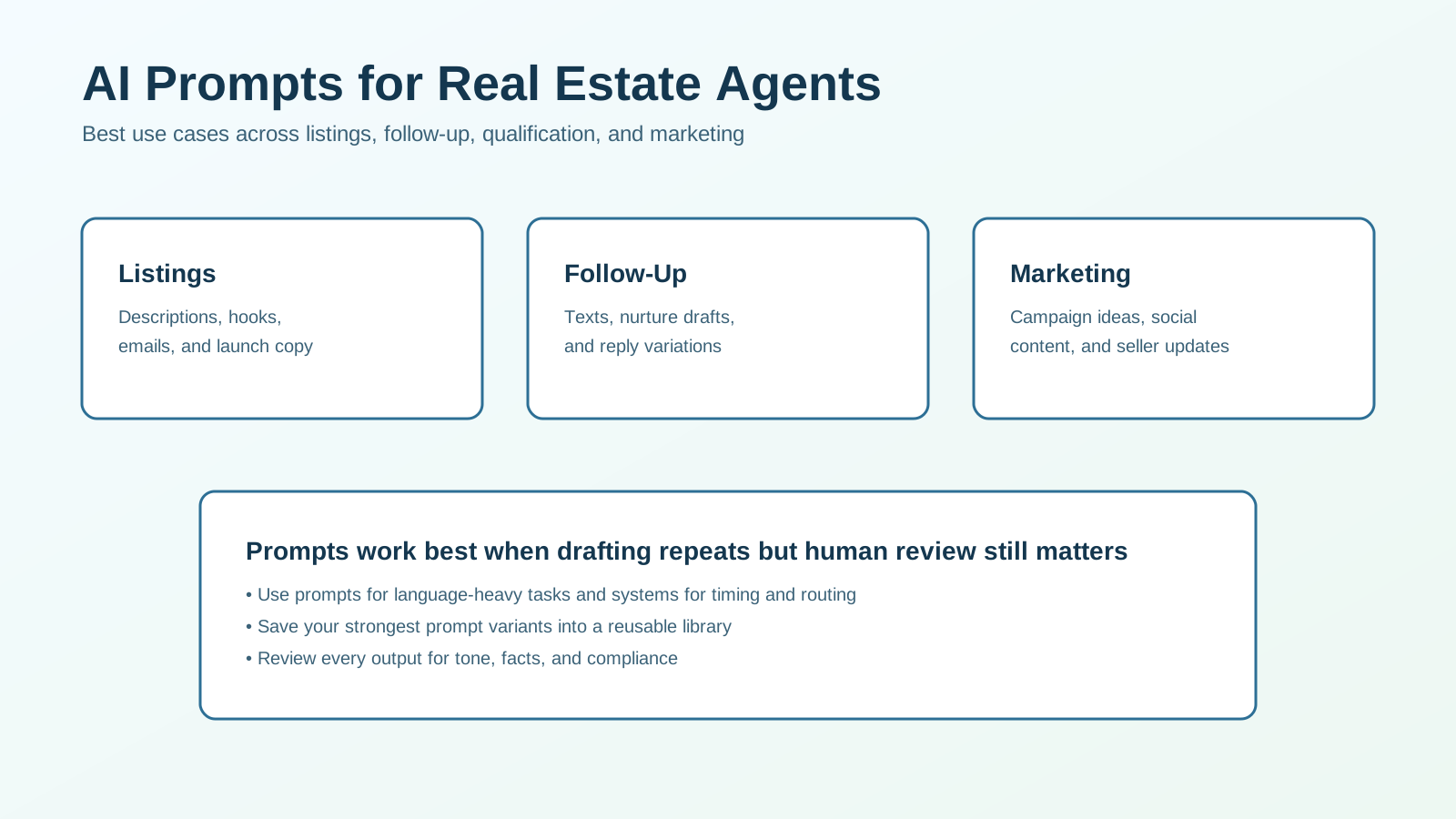
This guide maps prompt usage by workflow so you can decide where prompts belong and where a deeper automation system is the better answer.
For the full prompt library, start with AI Prompts. If you are already thinking beyond drafting support, see Real Estate CRM Automation and Real Estate Lead Follow-Up Automation.
What AI Prompts Do Best in Real Estate
Prompts are strongest when the job is:
- repetitive
- language-heavy
- context-driven
- easy to review before publishing or sending
They are especially effective for:
- first drafts
- message variations
- structured summaries
- campaign ideation
- converting notes into polished client-facing copy
They are weaker when the job requires:
- timing automation
- lead routing
- SLA enforcement
- task ownership
- multi-step branching logic
That split matters. Prompts accelerate communication work. Systems control operational execution.
Best Prompt Use Cases by Workflow
1. Listing Preparation
This is one of the highest-return prompt categories because listing work repeats every week.
Use prompts to create:
- MLS-ready descriptions
- short listing headlines
- social teaser copy
- email announcement drafts
- property feature summaries by buyer type
Relevant reads:
- 25 High-Performance Real Estate Listing Prompts for ChatGPT
- AI Listing Description Generators: Best Tools Compared for Real Estate
2. Lead Follow-Up
Prompting helps agents generate stronger first-touch and no-reply follow-up messages without writing every version from scratch.
Use prompts to build:
- first-response texts
- lead reactivation emails
- buyer check-in messages
- open house follow-up drafts
- timeline-based nurture variations
Relevant reads:
- 25 Real Estate Follow-Up Text Message Prompts for ChatGPT
- 25 Open House Follow-Up Prompts for ChatGPT
- Real Estate Lead Follow-Up Automation: Complete Workflow Guide
3. Qualification and Discovery
Prompts are useful before the call, during intake prep, and after the conversation when converting notes into next steps.
Use prompts to generate:
- buyer qualification questions
- seller motivation questions
- discovery-call agendas
- summary recaps from raw call notes
- branch-specific next-step recommendations
Relevant reads:
- 25 Real Estate Buyer Qualification Prompts
- Lead Qualification Automation for Realtors: Complete Workflow Guide
4. Marketing and Nurture
Prompts can increase output volume without forcing agents to sound like everyone else.
Use prompts for:
- campaign themes
- email nurture drafts
- social content calendars
- listing-launch bundles
- neighborhood education content
Relevant reads:
- 25 Real Estate Marketing Prompts for ChatGPT
- 25 Social Media Prompts for Realtors Using ChatGPT
- Real Estate Marketing Automation Workflow: Complete Guide
5. Seller Communication
This is an underused prompt category with strong practical value.
Use prompts to draft:
- seller update emails
- showing feedback summaries
- pricing-discussion framing
- listing-plan explanations
- post-open-house seller recaps
Pair this topic with the newer seller-specific prompt library in 25 Real Estate Seller Follow-Up Prompts for ChatGPT.
A Simple Prompt Operating Model
Use this sequence to keep prompt usage productive:
- Start with a clear task.
- Provide real context, not generic placeholders only.
- Tell the AI what output format you need.
- Review for facts, tone, and compliance.
- Save your strongest prompt variants into a reusable library.
Teams get the most value when prompts are documented and reused instead of reinvented ad hoc.
When Prompts Should Turn Into Systems
Prompts help with drafting. Systems help with execution.
You are likely past prompt-only territory if you need:
- response within 1-3 minutes
- source-based lead routing
- automatic task creation
- stage movement rules
- reporting by lead source and outcome
At that point, prompts should support a larger operating model rather than replace it.
That is why prompt libraries and automation workflows work best together.
Good next steps:
- CRM Automation for Real Estate Teams: Complete Workflow Guide
- AI Client Follow-Up System for Real Estate: Complete Workflow Guide
- Real Estate AI Automation for Solo Agents: What to Automate First
Common Mistakes Agents Make With AI Prompts
Mistake 1: Using Prompts With No Context
Fix: include audience, goal, property or lead details, tone, and output format.
Mistake 2: Treating AI Output as Final
Fix: review every message for accuracy and local-market fit.
Mistake 3: Overusing Long, Generic Prompts
Fix: build short reusable templates for recurring situations.
Mistake 4: Using Prompts Where Automation Is Needed
Fix: use prompts for content generation and workflows for timing, routing, and accountability.
Recommended Prompt Stack for Most Agents
For most agents, a practical setup looks like this:
- one prompt library for listings
- one for follow-up and qualification
- one for seller and nurture communication
- one saved set of brand voice instructions
That is enough to create repeatable quality without adding complexity too early.
If you want tool options around this stack, see Best AI Tools for Real Estate Agents: Practical Comparison by Workflow.
Conclusion
The best ai prompts for real estate agents are not the most complicated ones. They are the prompts that remove repeat drafting work from your week while preserving quality.
Use prompts where language work repeats. Use systems where execution must happen on time, every time.
That combination is what creates real efficiency.