Introduction
Many teams talk about speed-to-lead, but speed depends on a simpler system question:
Who owns the lead the moment it arrives?
When that answer is unclear, response time slips, duplicate outreach happens, and managers lose visibility into why opportunities stall. That is why real estate lead routing rules are foundational to any serious follow-up system.
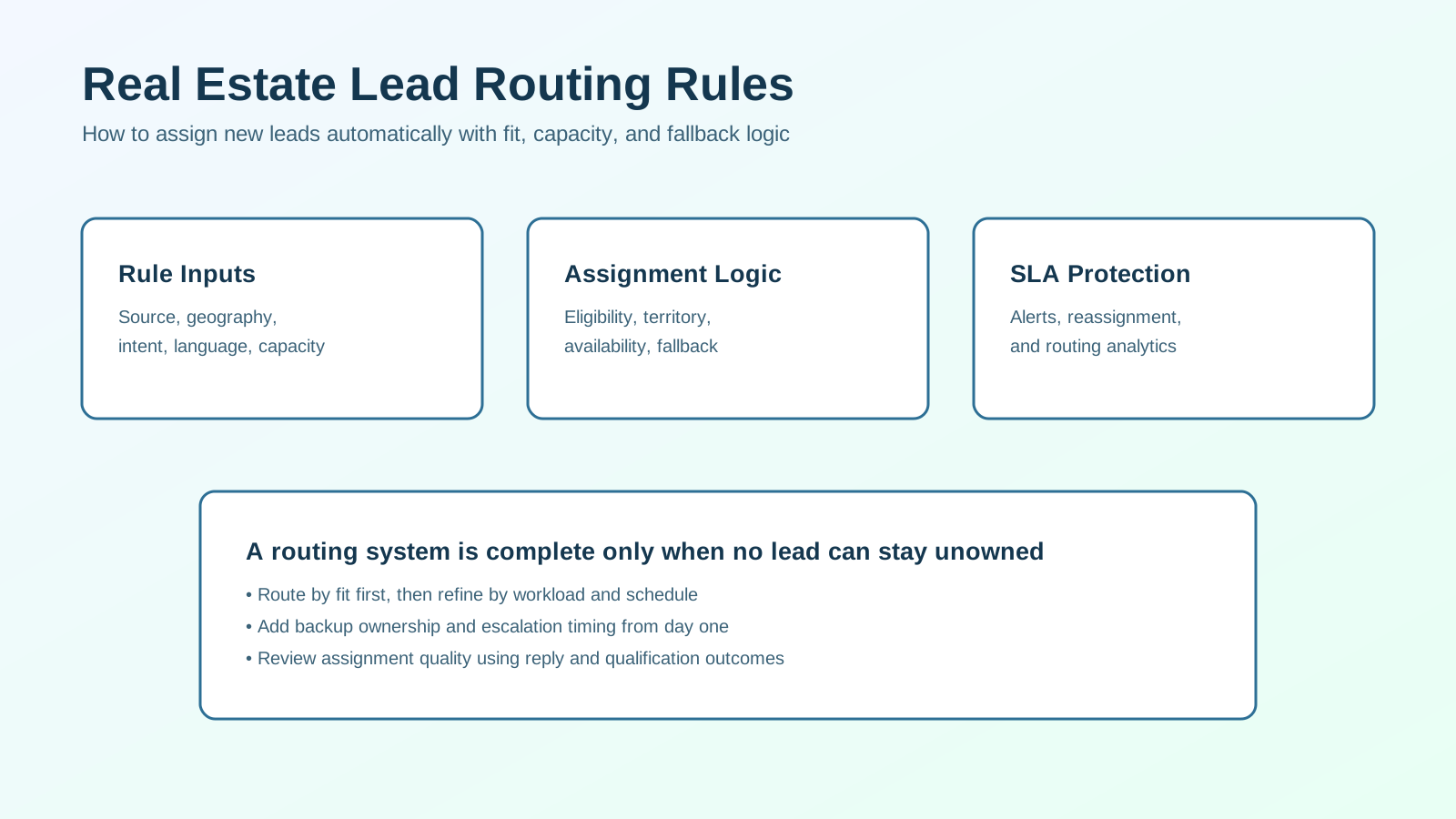
This guide focuses on routing as system design rather than just CRM configuration. The goal is not only to assign leads automatically. The goal is to assign them clearly, fairly, and in a way that supports conversion.
For more architecture-level content like this, see System Guides.
What a Routing System Must Solve
A strong routing system must answer four questions instantly:
- Which lead attributes matter for assignment?
- Who should own each lead type?
- What happens if the first owner does not act?
- How will routing quality be measured?
If any of these answers are missing, the routing layer is incomplete.
Core Inputs for Routing Decisions
At minimum, most teams should route using:
- source
- geography
- buyer vs seller intent
- price band or property type
- language
- team or agent capacity
- schedule or on-call window
Do not start with dozens of variables. Start with the few that actually change who should respond.
Recommended Rule Hierarchy
Use routing layers in this order:
Layer 1: Eligibility
Determine whether the lead belongs to:
- buyer flow
- seller flow
- rental flow
- investor flow
This prevents the wrong workflow from firing before ownership is even assigned.
Layer 2: Territory or Specialty
Assign by:
- neighborhood
- city
- property segment
- language
This protects fit and keeps conversations relevant.
Layer 3: Capacity and Availability
Then check:
- active workload
- business hours
- vacation or unavailable status
- round-robin balance if needed
Capacity should refine routing, not replace strategic matching.
Layer 4: Fallback
If the primary rule set cannot assign cleanly, send the lead to:
- backup owner
- team queue
- ISA or coordinator
- emergency first-response workflow
No lead should stay in a routing limbo state.
Baseline Routing Blueprint
Use this as a practical starting model.
| Lead type | Primary rule | Secondary rule | Fallback |
|---|---|---|---|
| Buyer inquiry | geography | agent capacity | team queue |
| Seller inquiry | listing area | seller specialist | coordinator review |
| Open house lead | event owner | territory owner | same-day team queue |
| Paid ad lead | source campaign | shift/on-call rule | backup responder |
| Luxury inquiry | price threshold | specialist assignment | manager review |
This model is simple enough to operate and strong enough to scale.
SLA Protection Rules
Routing alone is not enough. You also need protection rules.
Add these safeguards:
- create immediate response task on assignment
- alert if untouched after defined SLA
- reassign if no action after escalation window
- log all routing decisions in CRM history
This is how routing becomes operationally reliable instead of cosmetic.
For related workflow context, see Real Estate Lead Follow-Up Automation: Complete Workflow Guide.
Common Routing Failures
Failure 1: Overusing Round Robin
Round robin is useful for fairness, but weak as a primary strategy when specialization matters.
Failure 2: Ignoring Source Intent
A portal buyer lead, a referral seller lead, and an open house visitor should not always follow the same ownership logic.
Failure 3: No Backup Logic
If an owner is unavailable and nothing happens automatically, the routing system is unfinished.
Failure 4: No Reporting Review
Without routing analytics, teams cannot tell whether assignment logic is improving or hurting outcomes.
Metrics to Review Weekly
Track:
- time from intake to owner assignment
- time from assignment to first touch
- SLA breach rate by route type
- reply rate by assigned owner
- qualification rate by routing path
These numbers help separate a routing problem from a messaging problem.
How This Connects to the Bigger System
Routing sits between intake and follow-up.
That means it should work closely with:
- Lead Qualification Automation for Realtors: Complete Workflow Guide
- CRM Automation for Real Estate Teams: Complete Workflow Guide
- Real Estate Appointment Setting Automation: From Inquiry to Showing
When those layers are aligned, ownership becomes clearer and conversion work gets easier.
Conclusion
The best real estate lead routing rules do more than distribute leads. They protect accountability.
Design routing around fit, capacity, and fallback logic. Then measure whether those rules improve actual response and qualification outcomes.
That is how routing turns from back-end admin into a conversion system.