Best for
Teams with enough lead volume that agents need clearer prioritization instead of more raw inquiries.
Real estate lead qualification automation helps teams decide who needs immediate attention, who belongs in active nurture, and who should stay in a lighter long-term sequence. It is one of the fastest ways to improve follow-up quality when lead volume is not the main problem.
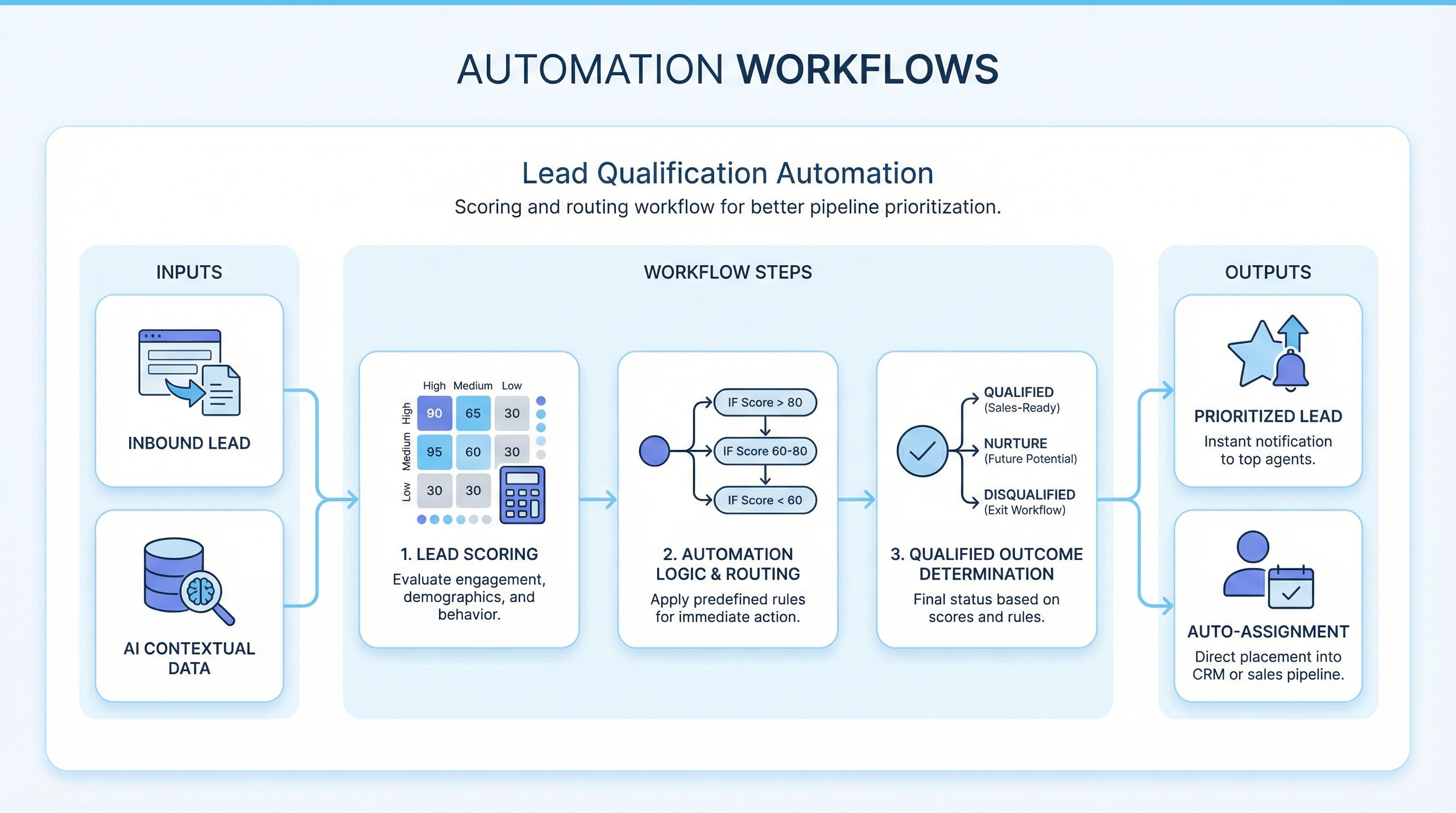
A useful lead qualification system should capture a few strong readiness signals, apply a simple scoring model, route high-intent leads quickly, and keep lower-intent leads in the right nurture path without wasting agent energy on poor-fit follow-up.
Teams with enough lead volume that agents need clearer prioritization instead of more raw inquiries.
More time spent on the right prospects and better speed-to-conversation for genuinely qualified leads.
Readiness scoring, routing rules, and stage-based next actions tied to a small set of strong signals.
The main idea is not complexity. It is clarity. A small number of useful signals usually outperform a bloated scoring system nobody trusts.
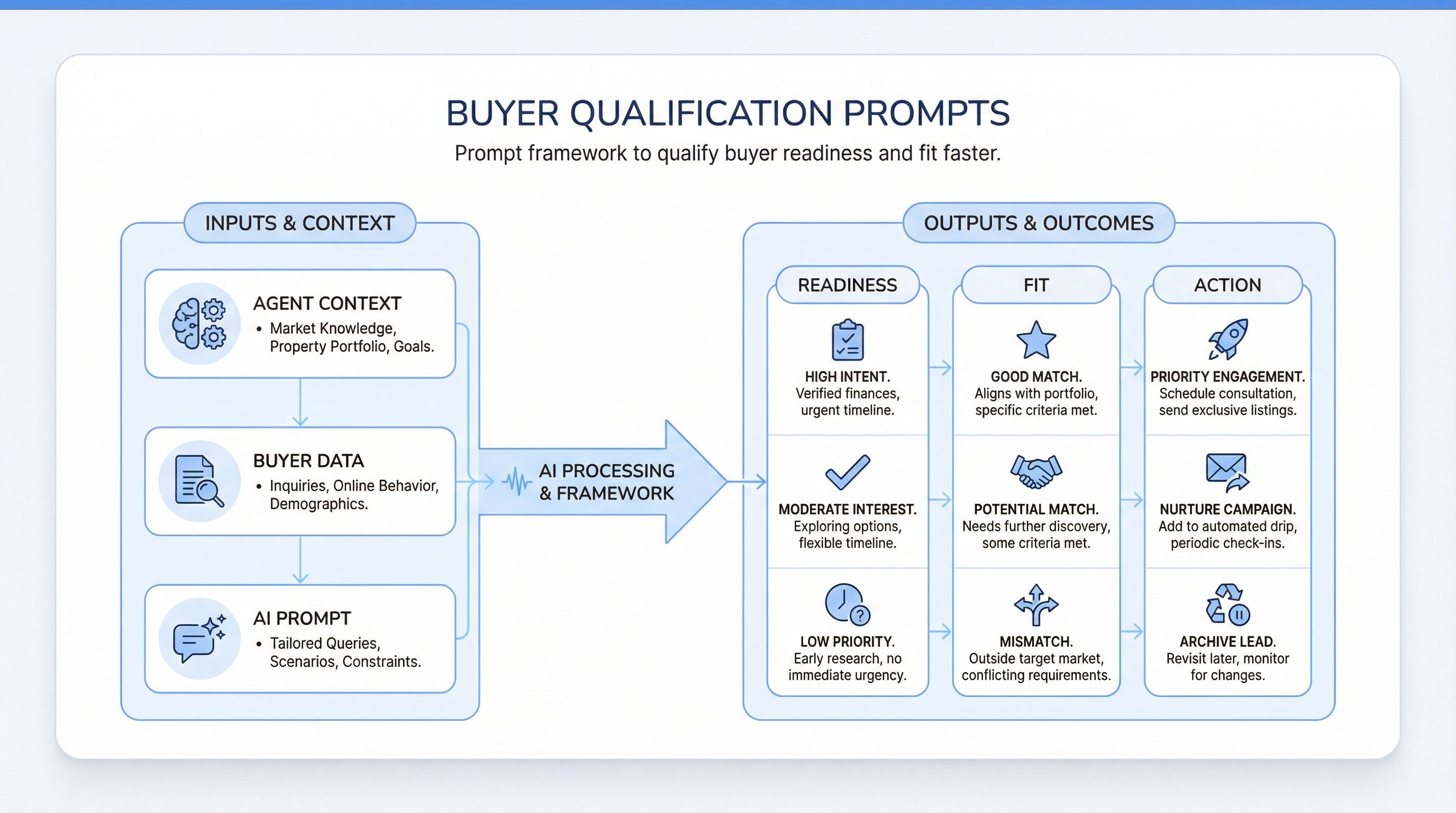
Timeline, financing, criteria clarity, and engagement behavior usually matter more than a long questionnaire.
Use a clear hot, warm, and long-term model first so the team actually follows the logic consistently.
High-intent leads should trigger fast live action, while less-ready leads enter nurture with the right cadence.
Qualification models should improve over time based on conversion outcomes, not guesswork or theory alone.
Qualification gets messy when teams score too many variables, document signals inconsistently, or fail to connect scoring with real routing and follow-up logic.
Real estate lead qualification automation works best when it feeds a clear operational system rather than producing scores no one acts on.
Real estate lead qualification automation is a workflow that evaluates readiness signals, applies a scoring model, and routes each lead into the right next action instead of relying on inconsistent manual judgment.
Start with timeline, financing or readiness, engagement behavior, criteria clarity, and explicit next-step intent before layering on more variables.
No. The goal is to match follow-up intensity to actual readiness so high-intent leads get faster attention and longer-cycle leads get the right nurture path.
It becomes valuable once a team has enough lead volume that agents are spending too much time on the wrong prospects or missing strong opportunities because readiness is unclear.