Best for
Teams losing leads to slow response, weak ownership, or inconsistent follow-up across channels.
Real estate lead follow-up automation helps agents and teams respond faster, route leads more cleanly, and keep nurture moving until the right moment for live conversation. If leads are slipping because response timing is inconsistent, this is usually the first workflow to fix.
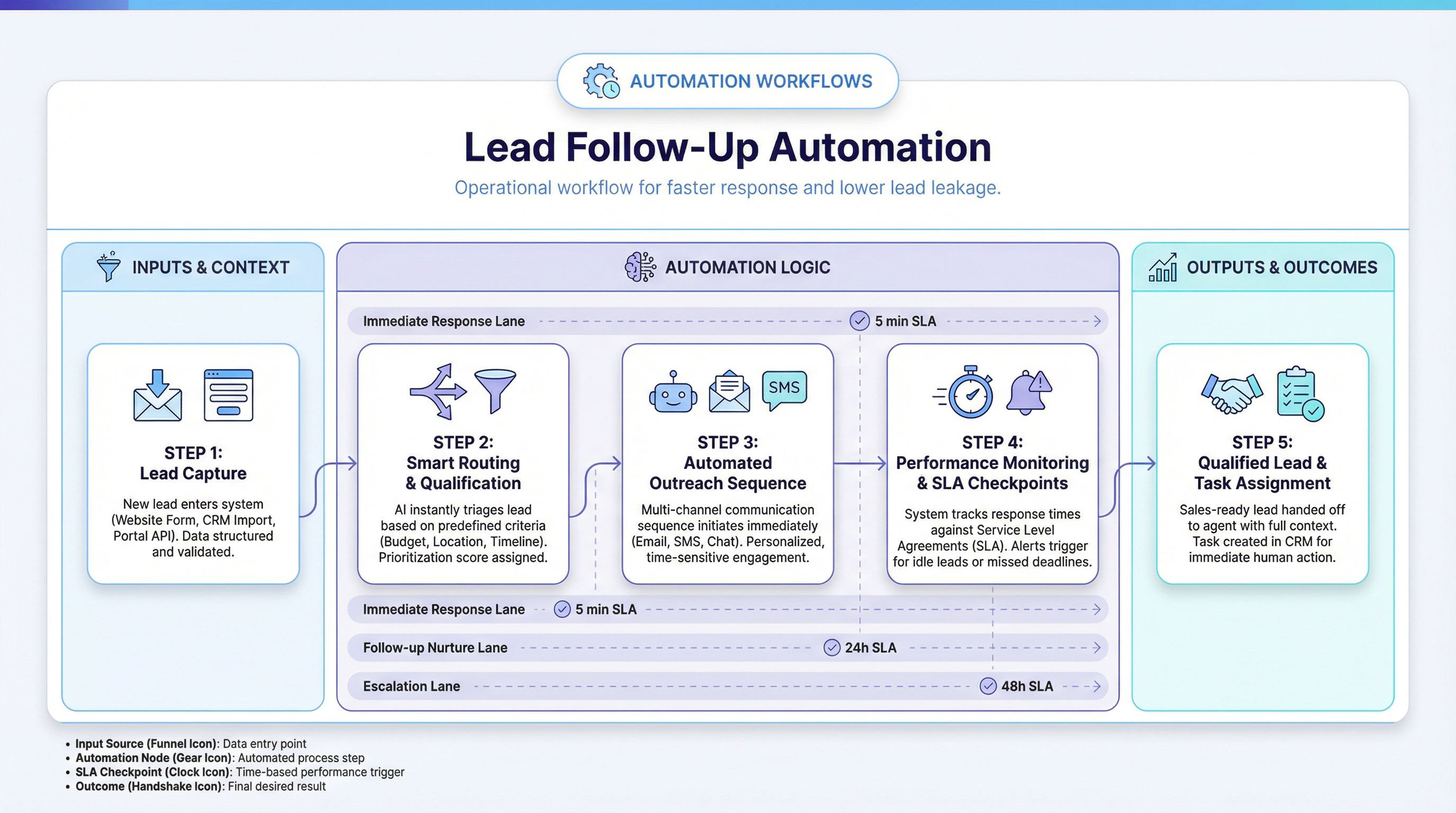
A strong lead follow-up system should do four things well: acknowledge new inquiries immediately, trigger the right email or SMS sequence, create a task when a lead shows intent, and keep lower-intent leads in a clean nurture path instead of letting them disappear.
Teams losing leads to slow response, weak ownership, or inconsistent follow-up across channels.
Faster speed-to-lead and fewer missed conversations caused by manual process gaps.
Immediate acknowledgment, task creation, branch logic, and stop rules before anything advanced.
This is the part readers should understand quickly. The idea is simple: automation handles timing and consistency, while humans step in at the moments that matter.
Every new inquiry should trigger a fast acknowledgment so the lead knows the request went through.
Use source, lead type, or behavior to launch the correct follow-up path instead of sending the same message to everyone.
Replies, repeat visits, or property-specific questions should create a live task or direct handoff to an agent.
When a lead is not ready yet, automation should continue the nurture without losing context or creating message fatigue.
Most teams do not fail because they lack message templates. They fail because response ownership is unclear, timing slips, and CRM actions do not reliably trigger when a lead engages.
A useful real estate lead follow-up automation system covers immediate acknowledgment, early qualification, engagement-based branching, and stop rules that prevent sloppy over-messaging.
Readers searching for real estate lead follow-up automation usually want more than a definition. They want a practical answer to how the system should work, what it should improve, and what to automate first.
That is why this page is structured to give a short operational answer up front, then support it with implementation detail, use cases, and deeper resources.
It is a workflow that captures new inquiries, sends fast first-touch responses, creates follow-up tasks, and keeps leads in the right nurture path until they are ready for a live conversation.
Start with immediate acknowledgment, simple qualification prompts, agent task creation, and stop rules that pause sequences once a lead replies or books.
No. Automation handles timing and consistency, while the agent should take over for consultative conversations, objections, and relationship-building.
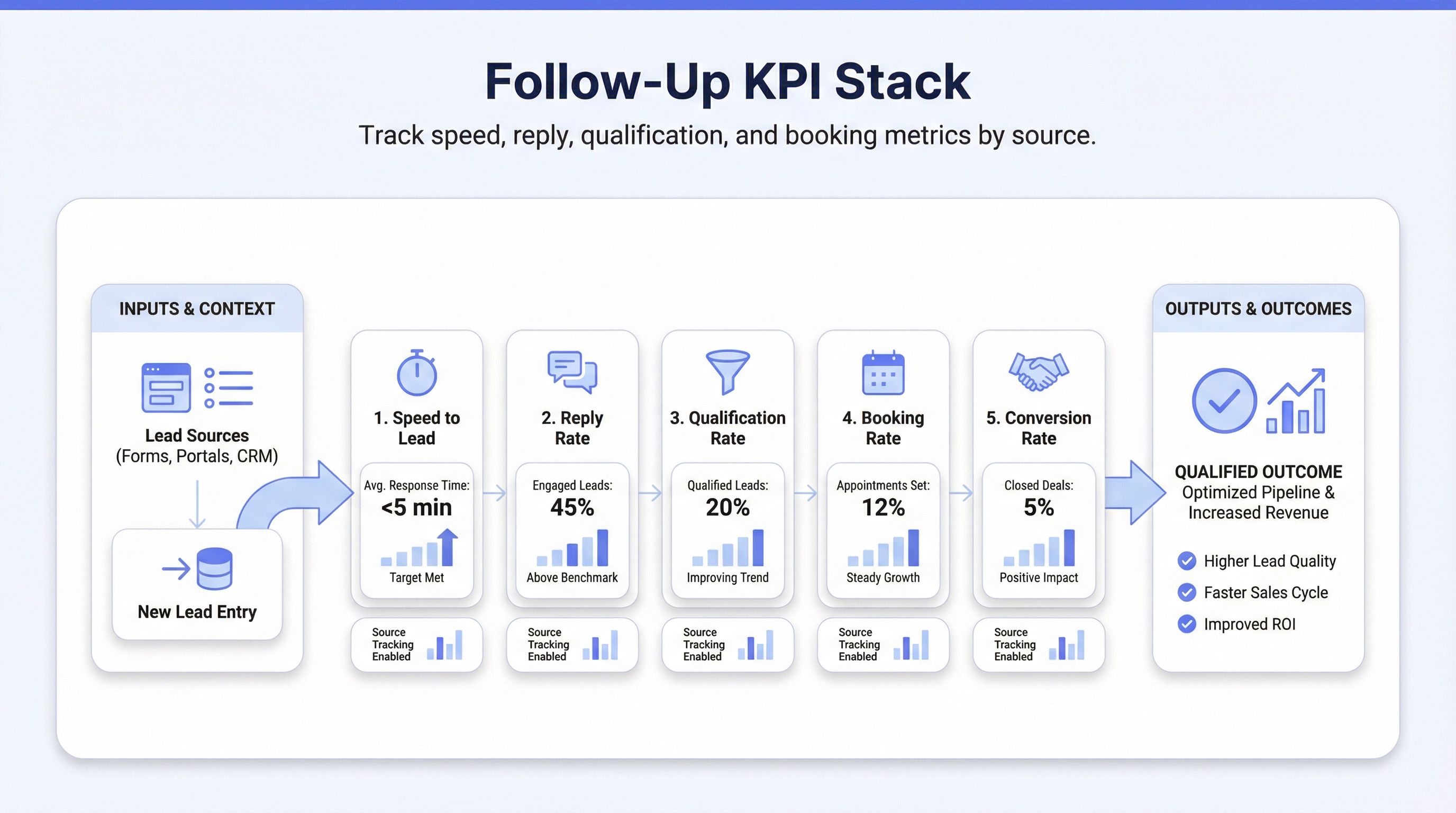
Track speed-to-lead, reply rate, qualification rate, appointment rate, and conversion by source so you can see whether the workflow is improving real pipeline outcomes.