Best for
Agents or teams running open houses regularly and losing momentum in the first 24 to 72 hours after the event.
Open house lead automation helps real estate agents turn event traffic into structured follow-up instead of post-event chaos. The best systems capture visitor data cleanly, follow up the same day, and route the most serious opportunities into live conversations quickly.
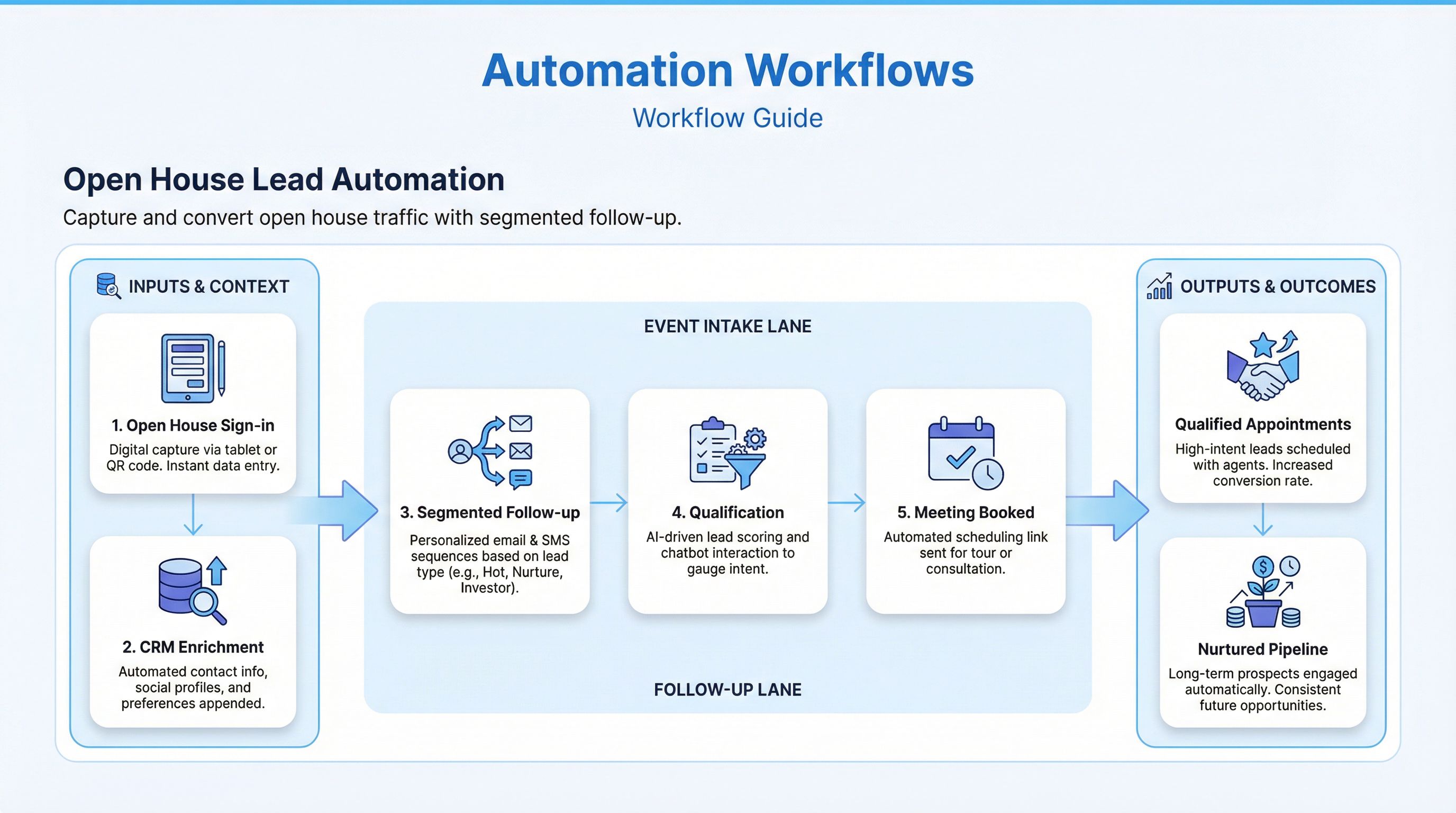
A useful open house workflow should capture visitor information in one structured way, segment attendees by readiness, send fast and relevant follow-up, and create a clear next action for anyone showing meaningful buying intent.
Agents or teams running open houses regularly and losing momentum in the first 24 to 72 hours after the event.
Better same-day follow-up and more appointments or next-step conversations from open house traffic.
Sign-in capture, attendee segmentation, same-day texts or emails, and live task creation for hot leads.
The goal is simple: make the event-to-follow-up handoff just as strong as the event itself.
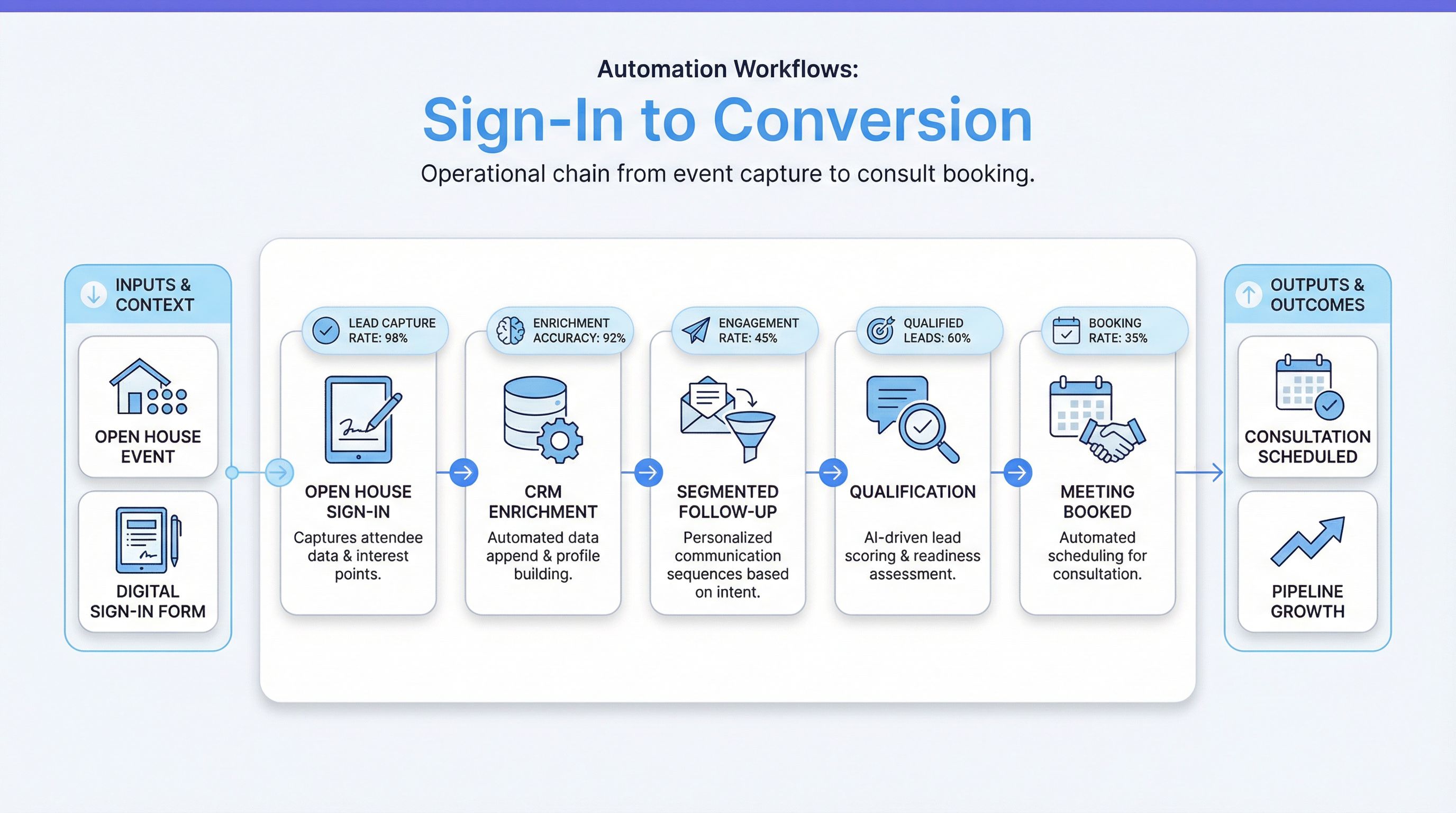
Use one sign-in system so names, phone numbers, emails, and buying intent are collected consistently.
Hot visitors, curious neighbors, active buyers, and long-cycle prospects should not receive the same next step.
Same-day follow-up keeps the property and the agent top of mind while event intent is still fresh.
High-intent signals should create live tasks or direct outreach so the strongest leads do not cool off overnight.
Most open house follow-up problems come from weak capture, generic messaging, or no clear rule for who deserves fast live attention. That creates missed chances even when attendance looks strong on paper.
Open house lead automation works best when the marketing, follow-up, and qualification parts are designed as one workflow.
Open house lead automation is a workflow that captures visitor data, segments people by interest and readiness, triggers fast follow-up, and routes stronger opportunities into live agent action.
Start with structured sign-in capture, same-day follow-up, simple intent-based segmentation, and next-step tasks for high-interest visitors.
They usually get lost because data capture is incomplete, follow-up is delayed, or every visitor receives the same generic message regardless of intent.
Yes. With the right prompts and segmentation, teams can personalize the first messages while keeping the workflow fast and repeatable.